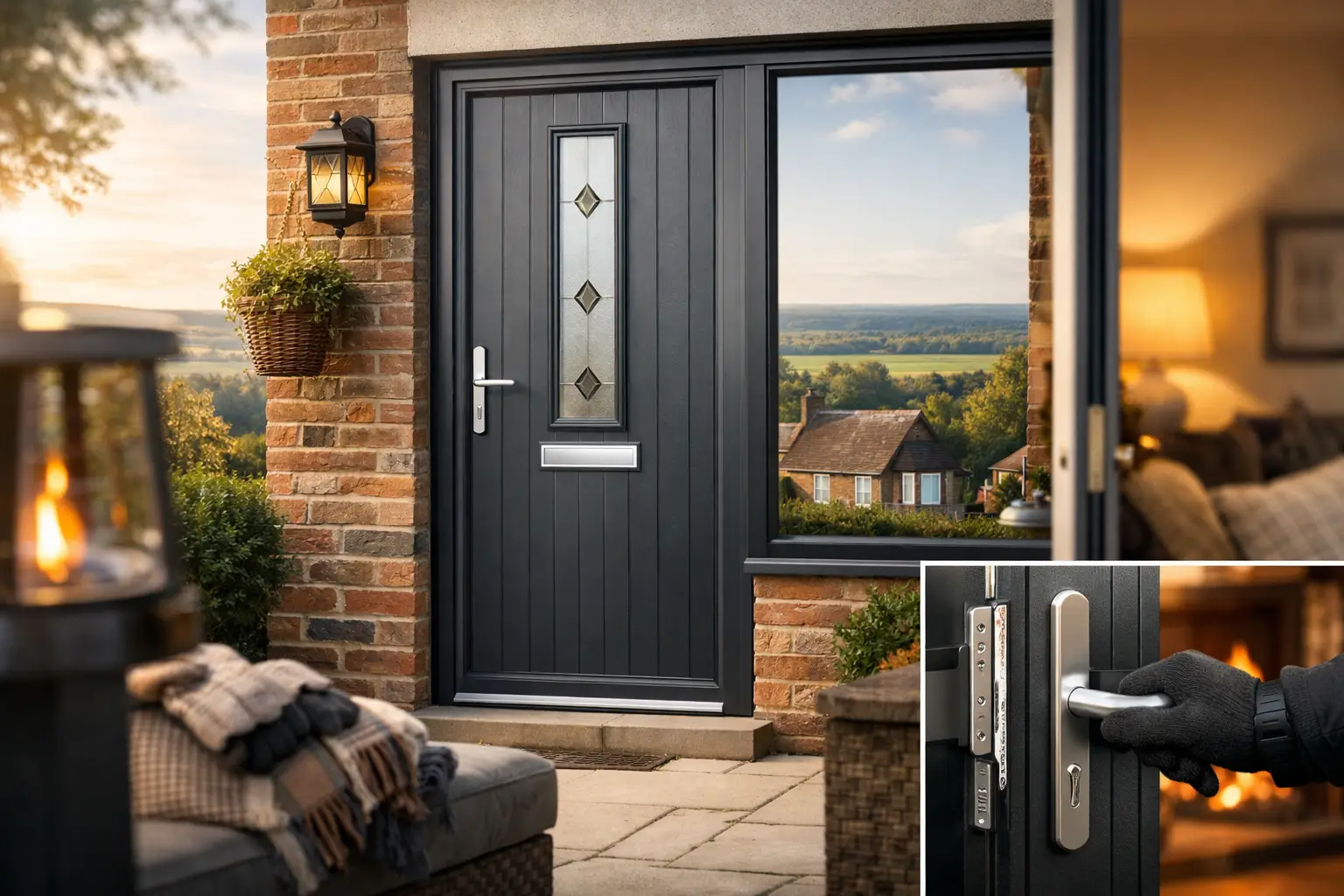
A front door has a demanding job. It must stand up to wet Kent winters, help keep costly heat indoors, welcome visitors and make your home feel secure every time you lock up. Composite doors are designed to meet all of those needs, combining the traditional appearance homeowners value with modern materials that make everyday life warmer, quieter and more reassuring.
For homes with a tired timber door, a draughty uPVC panel or an entrance that simply no longer suits the property, a well-chosen replacement can make a visible difference from day one. The key is looking beyond colour alone and choosing a door, glass and installation specification that fits your home and how you use it.
What are composite doors made from?
Unlike a door made from a single material, a composite door uses several layers to create a strong, insulated entrance. The exact construction varies by manufacturer, but it commonly includes an insulating core, durable outer skin, reinforced frame and high-quality seals. Each element has a purpose: strength for security, insulation for comfort and a weather-resistant finish for lasting kerb appeal.
This construction is why composite doors tend to feel more substantial than many older doors. They are made to resist everyday knocks, changing temperatures and rain without the regular painting and maintenance associated with traditional timber.
That does not mean every composite door is identical. The quality of the slab, frame, locking system, hinges, glazing and installation all influence how the finished door performs. A good product deserves a careful survey and professional fitting so that the seals close correctly and the door operates smoothly for years to come.
Why Kent homeowners choose composite doors
The most immediate benefit is often warmth. Older front and back doors can be a source of cold spots and draughts, particularly in properties with an exposed entrance, porch or hallway. A modern composite door with effective weather seals helps reduce unwanted airflow and supports a more comfortable home.
Security is another major consideration. A replacement door should feel dependable, not only look attractive. Composite doors can be specified with multi-point locking, reinforced components and secure glazing options, giving homeowners greater peace of mind when they are at home, away for the day or travelling on holiday.
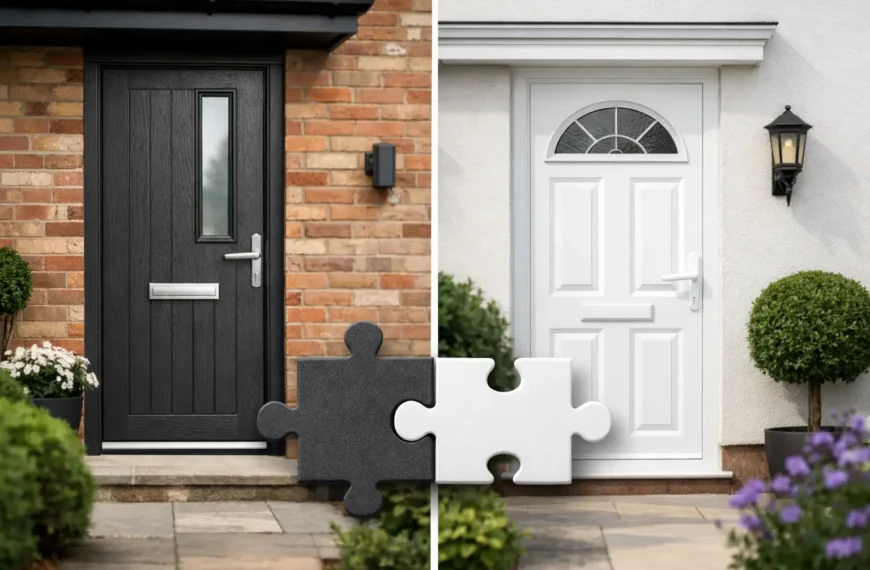
Then there is appearance. Your entrance is one of the first parts of your property that guests, neighbours and potential buyers see. Composite doors are available in styles that suit period cottages, suburban family homes and contemporary new-build properties alike. From classic woodgrain finishes to clean, modern colours, the right design can refresh the entire frontage without changing the character of the home.
Choosing the right composite door style
Start with the architecture of your property rather than the latest trend. A traditional home may suit a panelled door with decorative glazing, while a more contemporary property can look particularly smart with a simpler design, long glass panels or a bolder colour.
Colour matters, but it should work with the wider exterior. Consider your window frames, brickwork, render, roof tiles and porch. Anthracite grey remains a popular choice for modern homes, while black, deep blue, green and heritage shades can add character. White and lighter neutral colours often work well where you want a bright, understated finish.
Glazing can bring valuable daylight into a dark hallway, especially where there is no nearby window. Obscure glass keeps the entrance private while allowing light through, and decorative designs can add a more traditional touch. For a more open feel, side panels and fanlights may be worth considering, provided the proportions suit the property and the entrance has sufficient space.
The hardware is the finishing detail that brings the design together. Letterplates, knockers, handles and hinges are available in a range of finishes. Matching these with other features, such as exterior lights and house numbers, creates a considered look without making the entrance feel over-designed.
Front door or back door?
A front door is usually chosen with kerb appeal in mind, but a rear or side entrance needs just as much attention. Back doors often face harsher weather, lead directly into kitchens or utility rooms and may be used more frequently by families. Prioritise practical features such as secure locks, durable thresholds and glazing that offers light without overlooking concerns.
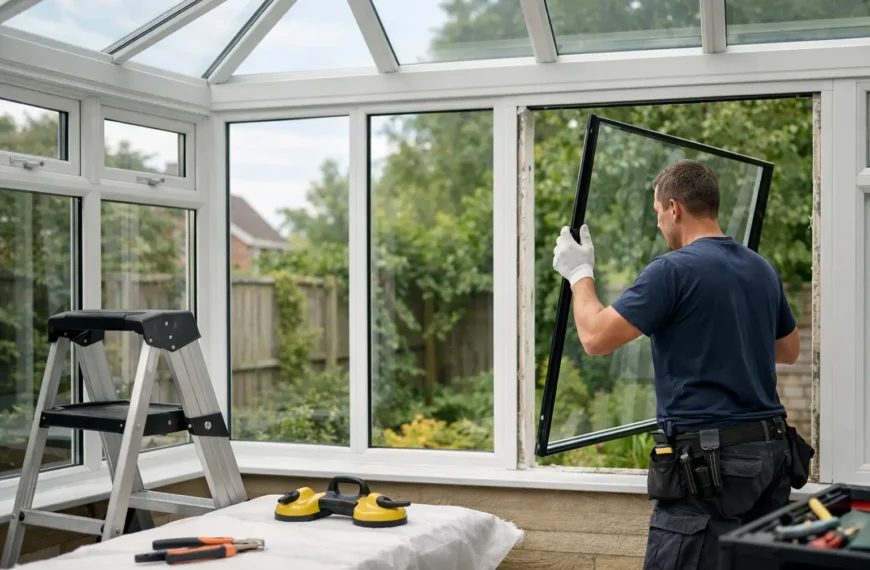
If you are replacing several exterior elements at once, it can also be helpful to consider how the door will sit alongside new windows, cladding, roofline or a porch. A coordinated approach can improve both the look and thermal performance of the property.
Energy efficiency is about the whole installation
A composite door can support a warmer home, but the door itself is only one part of the result. The frame must be fitted squarely, the gap around the opening needs to be sealed properly and the threshold should be appropriate for the location. Poor installation can leave draughts and affect how easily the door locks, even if the product itself is high quality.
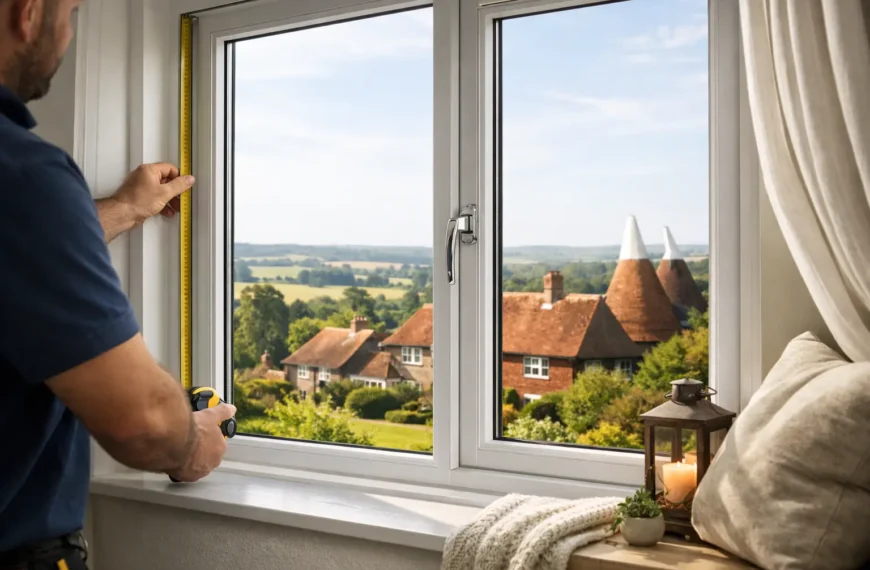
During a home consultation, ask how the existing frame will be assessed, whether any repair work is needed around the opening and how the new door will be finished internally and externally. These details are particularly relevant in older Kent properties, where openings may not be perfectly level and previous alterations can be concealed behind trims.
It is also sensible to ask about product guarantees and aftercare. A replacement door is a long-term investment, so you should know who to contact if an adjustment is required after fitting. An established local installer offers the added reassurance of a team that understands the area and remains available after the work is complete.
What to expect during installation
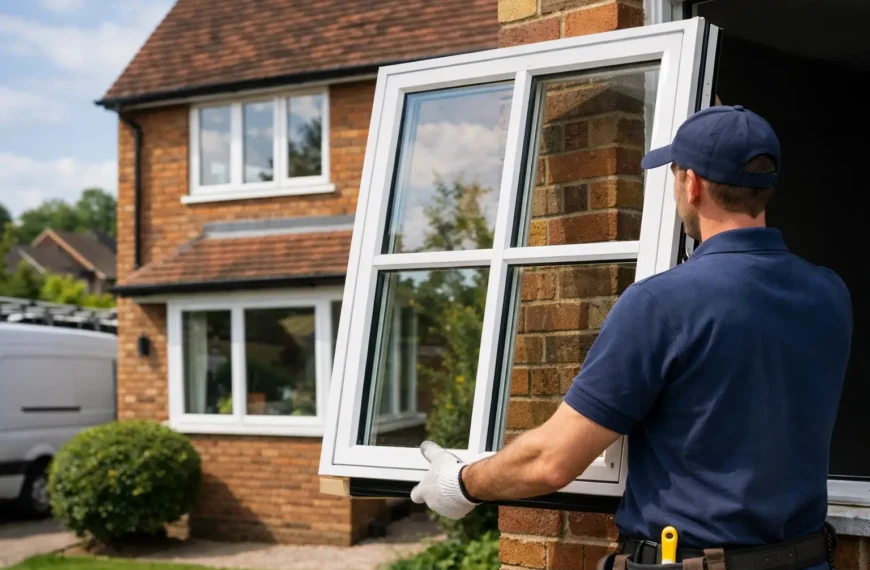
Most straightforward replacement door installations can be completed efficiently, with the old door and frame removed before the new unit is fitted, secured and sealed. Your installer should protect the immediate work area, check that the door opens and locks correctly, and leave the entrance clean and usable.
There can be exceptions. If the existing frame is damaged, the opening needs structural attention or you are adding sidelights, a porch or new glazing, the work may take longer. A clear quotation and survey should explain the scope before installation begins, so there are no surprises on the day.
You should also be shown how to use the locking system and care for the door. Modern multi-point locks often require the handle to be lifted before turning the key, and understanding this from the start helps protect the mechanism.
Looking after a composite door
One of the attractions of composite doors is their low-maintenance finish. Regularly wipe the door and frame with warm water and a mild, non-abrasive cleaner, then dry the surface with a soft cloth. Avoid harsh chemicals, scouring pads and solvent-based products that may damage the finish.
Keep the drainage areas around the threshold clear of leaves and grit, especially after autumn weather. Hinges and moving components may occasionally need a light check or adjustment, while locks should only be lubricated with a suitable product. If the door begins to catch, becomes difficult to lock or you notice a damaged seal, arrange an inspection rather than forcing it.
A worthwhile improvement for everyday comfort
The best composite doors do more than create a smart first impression. They help make the hallway less draughty, improve confidence in your home security and remove the upkeep that comes with ageing timber. With the right style and professional installation, they are a practical upgrade that adds value to how your home looks and feels every day.
For homeowners planning a replacement entrance in Kent, Totalglaze can help you compare designs, colours, glazing and security options with friendly, experienced advice. A free quote is a useful first step towards an entrance that feels welcoming, secure and built for the years ahead.