A flat roof can look perfectly acceptable from ground level while water is quietly finding its way beneath tired seams, cracked coatings or lifted edges. When replacement is due, the EPDM roofing vs felt decision is usually about more than appearance. It affects how long your roof should last, how disruptive the work will be and how much confidence you have when Kent weather turns wet and windy.
Both materials can provide a practical, weatherproof finish when they are correctly specified and professionally installed. The right choice depends on the roof’s condition, its size and shape, your budget, and whether you are looking for a short-term repair or a long-lasting upgrade.
EPDM roofing vs felt: the key differences
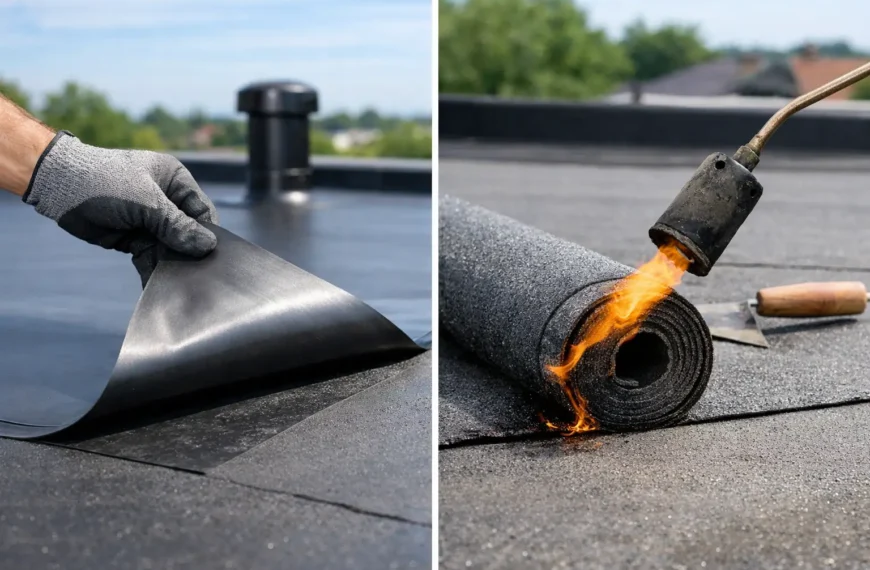
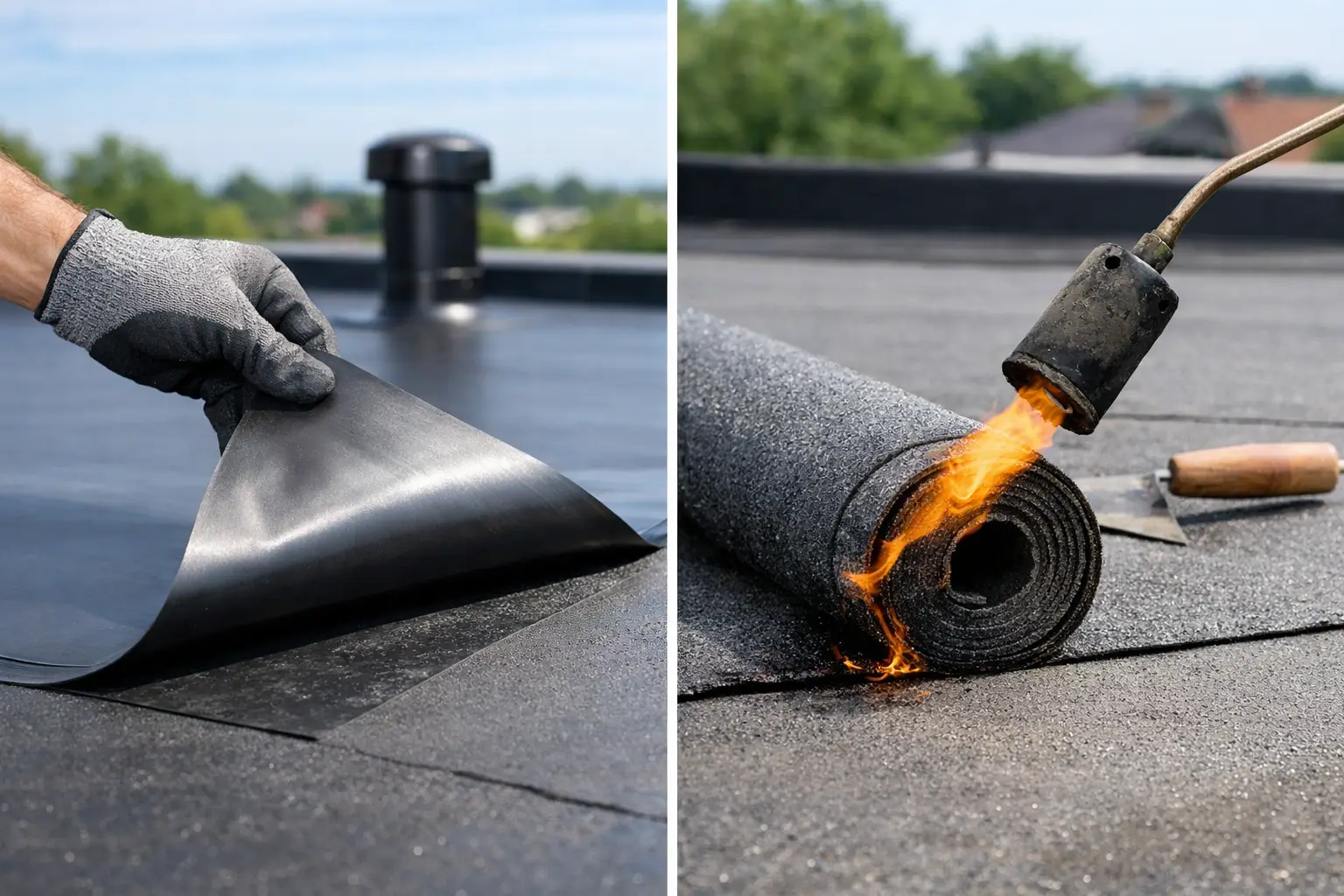
EPDM is a synthetic rubber membrane designed for flat and low-pitched roofs. It is generally supplied in large sheets, which can often cover a domestic garage, porch or extension roof with few joins. The membrane is bonded to a prepared deck and finished neatly around edges, outlets and upstands.
Felt roofing is usually made from layers of bitumen-based material. Modern high-performance felt systems are far removed from the basic roofing felt many homeowners remember. They can be torch-applied or cold-applied, often with a mineral finish that provides UV protection and a traditional flat-roof appearance.
The most noticeable practical difference is in the number of seams. An EPDM roof may have very few, reducing the areas where water could eventually find a weakness. Felt systems use overlapping rolls, so the quality of the detailing and workmanship at each lap is particularly important.
| Consideration | EPDM rubber roofing | Modern felt roofing | | — | — | — | | Expected lifespan | Often 30 years or more when installed correctly | Commonly 15-25 years, depending on the system and maintenance | | Seams | Usually fewer seams on a domestic roof | More overlaps and joints | | Finish | Smooth, dark rubber appearance | Often mineral-finished, more traditional in appearance | | Installation | Cold-applied in many cases | May involve hot works or cold-applied alternatives | | Repairs | Straightforward where damage is localised | Repairable, but patches must bond well with the existing surface |
These are broad guides rather than guarantees. The roof deck, drainage, insulation and installation standard all have a major influence on how any flat roof performs over time.
Why homeowners choose EPDM roofing
For many homeowners, EPDM is the preferred option when replacing an ageing garage, extension, porch or bay roof. Its flexibility is a real advantage in British conditions. Rubber can cope well with changes in temperature without becoming brittle, and it remains resilient in heavy rain, frost and strong sunshine.
A single-piece membrane also creates a clean, modern finish. Where the roof shape allows, fewer joins mean fewer potential weak points. This is especially reassuring on a roof over a kitchen extension, utility room or valuable garage storage, where even a small leak can cause expensive internal damage.
EPDM is also installed without the flames associated with traditional torch-on felt. That does not make the work risk-free, as careful preparation and correct adhesive application are essential, but it can be a useful consideration for roofs close to timber fascias, conservatories, windows or neighbouring properties.
The material is not invulnerable. Sharp objects, careless access and poorly detailed edges can still cause problems. It also needs a sound, dry substrate. Covering a failing roof deck with any new membrane is rarely a sensible solution, as trapped moisture and movement below can shorten the life of the new roof.
EPDM suits long-term replacement projects
If you expect to remain in your property for many years, the longer service life of EPDM can make its higher initial cost worthwhile. It is often a strong fit for homeowners who want to replace a leaking flat roof once, rather than continue paying for repeat patch repairs.
It can also complement wider exterior improvements. Replacing old fascias, guttering or cladding at the same time can give the roof edges a properly finished appearance and help rainwater flow away as it should.
When felt roofing can still be the right choice
Felt remains a respected flat-roof material, particularly where a property requires a finish that matches an existing roof or where the budget is tightly controlled. A good-quality modern felt system, fitted by an experienced installer, can provide dependable protection for many years.
It is also versatile. Felt can be detailed around awkward shapes, penetrations and complex roof layouts, although this requires care. For some refurbishment projects, especially where the roof has multiple changes of level or small areas to cover, felt may be the more practical specification.
Cost is often the deciding factor. Felt can have a lower upfront price than EPDM, although the difference varies according to access, roof preparation, insulation requirements and the chosen system. It is worth comparing like for like. A quotation for a basic overlay is not equivalent to one that includes removing failed materials, renewing damaged decking, improving drainage and fitting new edge trims.
Traditional torch-on felt installation involves heat, so appropriate safety procedures are essential. Cold-applied felt alternatives are available in some situations, but they still need careful handling and the correct preparation to achieve a secure bond.
Felt is not a shortcut for poor preparation
A new felt covering will not solve standing water, rotten timber or an undersized rainwater outlet. If water ponds regularly, the roof may need improved falls or drainage before the finish is applied. Likewise, a roof that feels soft underfoot may have deterioration in the deck below that must be addressed first.
This is why a proper site survey matters. The visible roof covering tells only part of the story.
What affects the cost of a flat roof replacement?
Material is only one part of the final price. A small, simple garage roof with easy access will cost less to replace than an extension roof surrounded by conservatory frames, parapet walls and limited working space.
The existing roof build-up also matters. Removing several old felt layers takes time and responsible disposal. If the deck is damaged, it should be renewed rather than hidden beneath a new covering. New insulation may be advisable too, particularly on an older extension that feels cold in winter or overheats in summer.
Details make a significant difference to performance and price. Drip trims, gutter edges, wall flashings, rooflights, pipe penetrations and outlets must all be finished correctly. These are the places where rushed work tends to reveal itself first.
Rather than choosing solely on the lowest figure, ask what the quotation includes. A clear proposal should explain the roof preparation, membrane or felt system, edge details, rainwater arrangements, waste removal and guarantee. This gives you a fair basis for comparison and reduces the risk of unwelcome extras later.
Lifespan, maintenance and repairs
Neither EPDM nor felt needs complicated routine maintenance, but both benefit from an occasional check. Clear leaves, moss and debris from outlets and gutters, especially after autumn. Water should drain freely rather than sit in deep pools for prolonged periods.
Inspect the roof after severe weather if it is safe to do so. Look for lifted edges, damage around rooflights and pipes, or splits in the surface. Do not walk on a roof unnecessarily, particularly if it is older or you are unsure of the deck beneath it.
Small issues are often easier and less expensive to repair before water reaches the structure. EPDM can normally be repaired with compatible patches and adhesives. Felt can also be patched, but the condition of the surrounding material matters. If repairs are appearing in several places, replacement may offer better value and greater peace of mind.
Choosing the best material for your property
Choose EPDM when you want a durable, low-maintenance rubber roof with minimal seams and a strong long-term outlook. It is particularly well suited to straightforward domestic flat roofs where a single membrane can be used to good effect.
Choose a quality felt system when budget, existing appearance or a complex roof layout makes it the more suitable option. Modern felt is not an inferior material by default, but it needs the right system and professional detailing to achieve a reliable result.
For either material, insulation and drainage should be part of the discussion. A flat roof replacement is an opportunity to improve comfort in the room below, reduce heat loss and deal with the causes of previous leaks rather than simply covering them up.
A knowledgeable local surveyor can assess the roof structure, identify hidden issues and explain the options in plain English. Totalglaze helps Kent homeowners make practical exterior improvements with professional installation and clear advice, so you can choose a flat-roof solution that feels right for your home, not just for today’s budget.